Zhongshigao New Energy has been included in the first batch of Qingdao scenario list for 2026, enabling green transformation and fostering new quality productive forces.
In this scenario selection and evaluation process, it closely adhered to the work arrangements of the "Action Plan for Accelerating Scenario Innovation Application and Promoting New Quality Productive Forces Development in Qingdao (2026-2028)". It focused on six major areas: strengthening industrial chains, technological innovation, consumption upgrading, improvement of people's livelihood, green transformation, and intelligent governance. Ultimately, 165 scenario lists (including 60 opportunity scenarios and 105 capability scenarios) were selected and made available for open cooperation to the entire society. Through precise matching of supply and demand, it aimed to promote the implementation and effectiveness of new technologies and new products, injecting new momentum into the high-quality development of the city's industries.
01.The energy shortage on offshore islands is never a complete absence of electricity.
The energy predicament on isolated islands is more specific than most people imagine.
Many islands still rely on diesel generators to power their operations. Diesel has to be transported by ship in barrels, and it is cut off in bad weather. The cost of generating electricity is high, it is noisy and polluting, and it often trips the circuit breaker. But laying submarine cables there would require an investment of tens of millions of dollars, and for small islands with a small population and unstable load, the economic calculation simply doesn't make sense.
Renewable energy? Sounds green, but the sunlight and wind on islands are "dependent on the weather", and the generated electricity cannot be stored. It is abundant during the day and useless at night. When operating off-grid, it is exposed when encountering rainy days.
In the end, what the islands truly lack is not the "generation" action itself, but an energy chain that can be self-sufficient, stable, and closed-loop - where does the electricity come from, how is it stored, and how is it used? These aspects must be connected to be meaningful.
02 A single membrane electrode converts seawater into a closed loop.
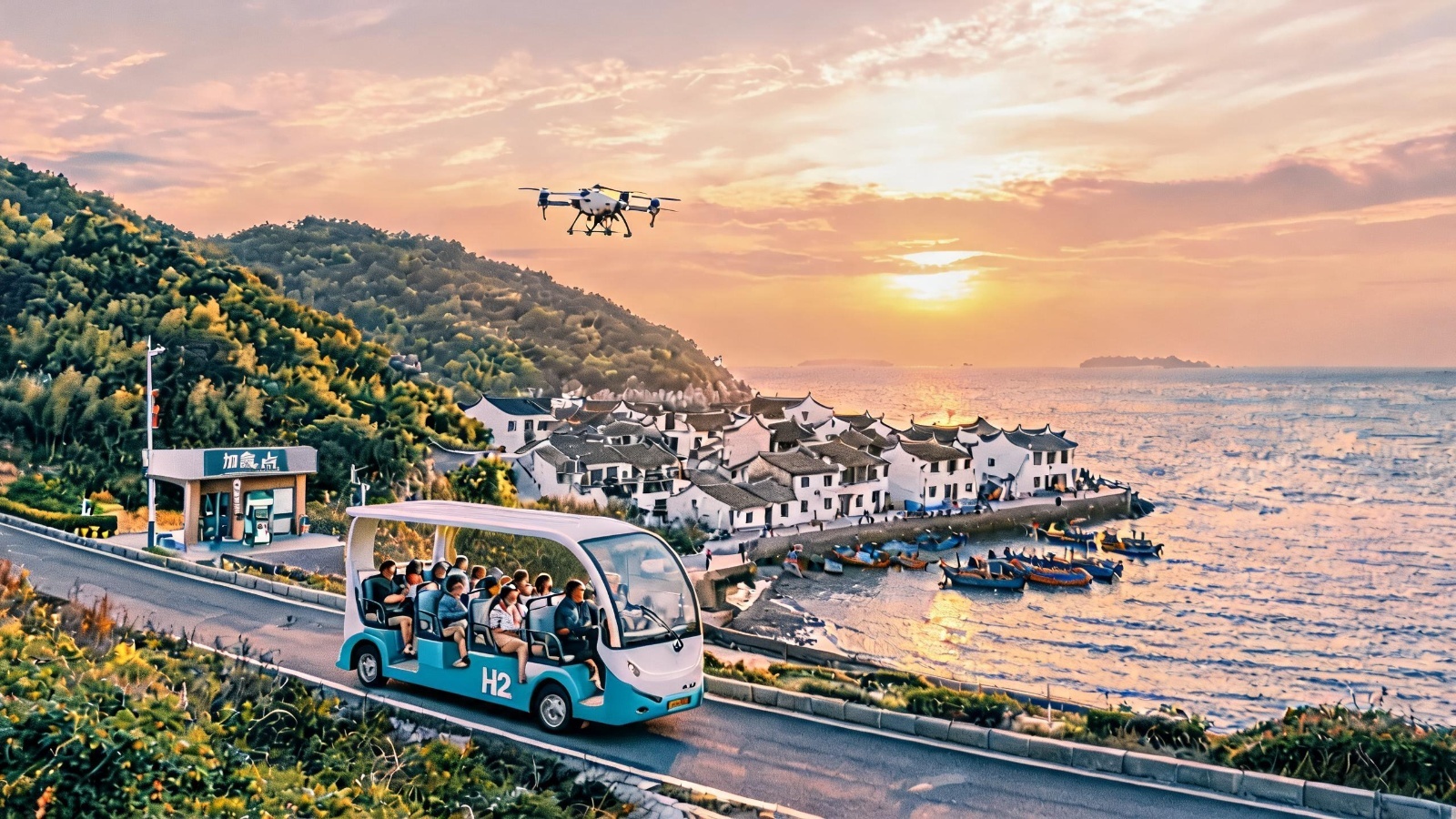
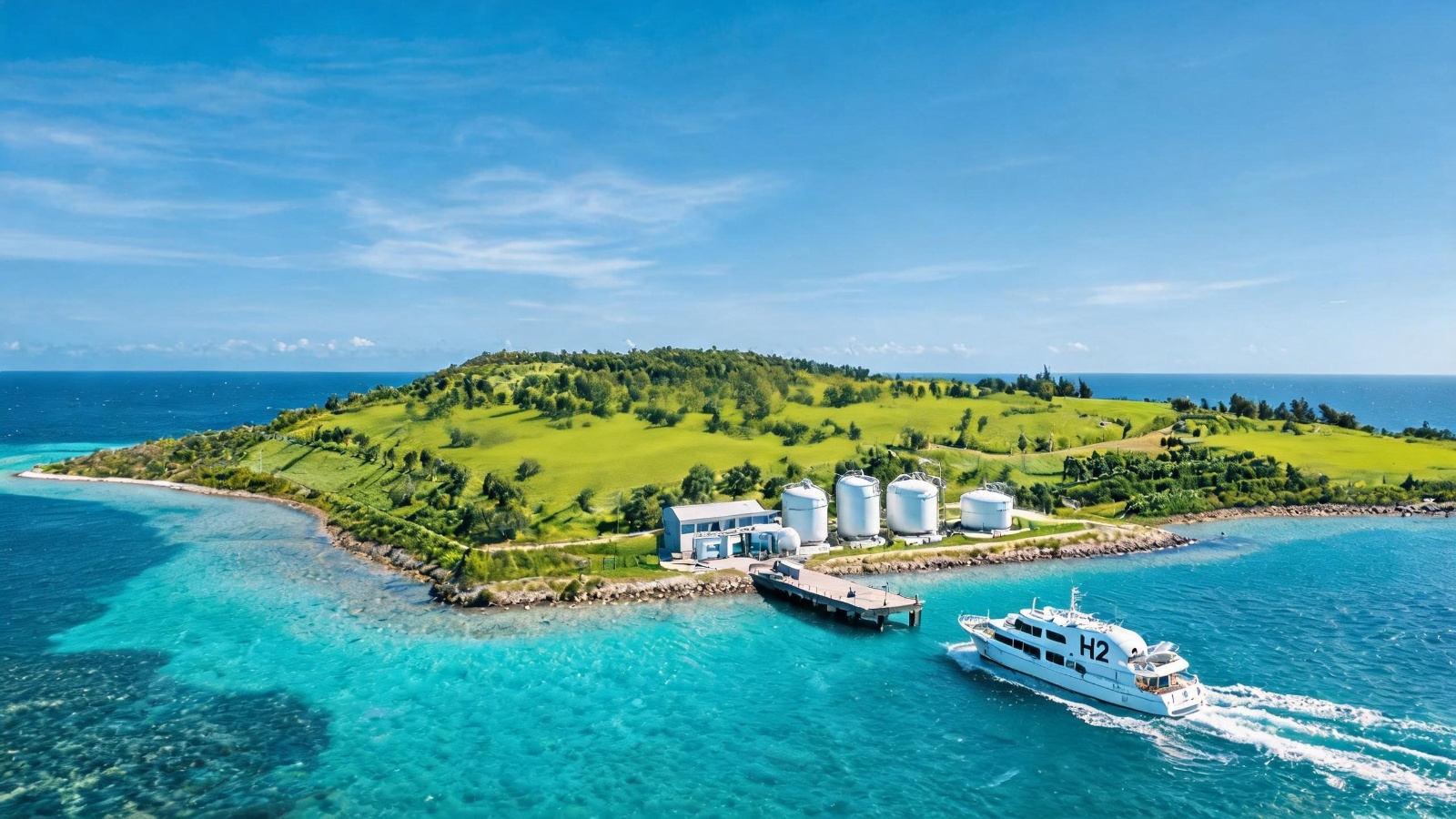
The answer provided by Shengda New Energy is to start from the most core and most challenging aspect - the membrane electrode. This "offshore island hydrogen energy comprehensive scenario solution" relies on the self-developed high-performance membrane electrode to build a complete chain system of "seawater hydrogen production - hydrogen storage - hydrogen utilization". On an island, the most abundant resources are seawater and wind and solar energy. By directly electrolyzing seawater with wind and solar power to produce hydrogen and then storing the hydrogen locally, hydrogen can be supplied to terminal equipment such as hydrogen-powered sightseeing vehicles, yachts, and unmanned aircraft.
In this way, the problem of "relying on the weather for electricity generation" is circumvented - when there is plenty of electricity, hydrogen is produced and stored, and when there is less electricity, hydrogen is used to make up for it, effectively creating an "energy reservoir" for the island. Meanwhile, hydrogen-powered vehicles, hydrogen-powered ships, and hydrogen-powered unmanned aircraft also solve the most troublesome traffic pollution problem on the island.
From "process-driven" to "green self-driven", this solution simultaneously addresses the three issues of power supply, energy storage, and transportation.
03 From the blueprint to the island, a crucial step has been taken.
Technology cannot remain confined to the laboratory. This solution has now completed pilot testing and has reached a cooperation agreement with Lingshan Island. The goal is to build a benchmark for zero-carbon islands.
Lingshan Island is China's first "negative carbon island" to be certified by authoritative departments. It is also the most ideal "real battlefield" for this solution. If the closed loop of "seawater hydrogen production - hydrogen storage - hydrogen use" can be successfully implemented on Lingshan Island, then it will no longer be a demonstration project but a mature model that can be replicated to more offshore islands and even broader maritime scenarios.
Behind this is the technological accumulation of Zhongshigao New Energy, a high-tech enterprise and technology-based small and medium-sized enterprise. Leveraging the research background of China University of Petroleum (East China), the company has continuously深耕ed in emerging energy technology research, new materials, and energy storage technology, turning the membrane electrodes in the laboratory into practical equipment.
04
The list of selections is not only an acknowledgement but also a new starting point.
Successfully being included in the municipal scenario list is not only an authoritative recognition from the official body of the company's technological value and industrial implementation capabilities, but also opens up a new channel for the product to serve the local area and deepen the supply-demand connection.
Next, Shengda New Energy will take this as an opportunity to actively connect with the local island and marine energy demands, continuously refine its core capabilities, and bring the mature zero-carbon island solution to more islands. With hydrogen energy loops, it will empower the construction of the new power system and contribute to Shandong Province in cultivating new quality productive forces and building a modern industrial system with the strength of Shengda.
From the energy supply problem of one island to a replicable zero-carbon solution, Shengda New Energy is putting the blueprint of the "Eastern Hydrogen Island" onto the sea one piece at a time.